
LncRNA THUMPD3-AS1 Regulates Behavioral and Synaptic Structural Abnormalities in Schizophrenia via miR-485-5p and ARHGAP8
Published in Advanced Science, 2025
Authors: Xiaojuan Gong, Lingxi Chen, Xin Guo, Anna Jiang, Yayi He, Chunxia Yan, Liang Ma, Jiayang Gao, Jinyu Zhang, Bao Zhang.
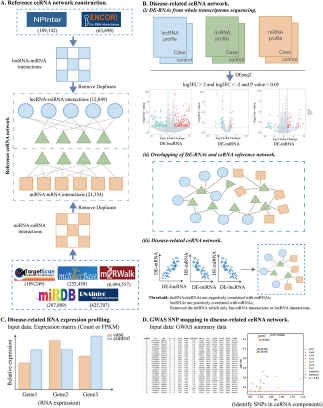
- Abstract: Schizophrenia (SCZ) is characterized by synaptic structural deficits, yet how dysregulated noncoding RNAs (ncRNAs) drive these abnormalities remains unknown. Through integrative multilayered analysis of SCZ data from whole transcriptome sequencing (blood samples), GWAS risk loci, and expression data using pipeline ceRNAxis, the THUMPD3-AS1/miR-485-5p/ARHGAP8 axis is identified as a key regulator of synaptic function. Functional validation reveals that THUMPD3-AS1 acts as a competitive endogenous RNA, sequestering miR-485-5p and thereby derepressing ARHGAP8. Despite suppressing RhoA activity, ARHGAP8 enhances ROCK2 activation through RhoB/C-mediated compensatory mechanisms. Hyperactivation of ROCK2 through this noncanonical pathway disrupted actin cytoskeletal remodeling patterns, leading to increased immature dendritic spines and synaptic ultrastructural defects, which are pathological features associated with SCZ. In vivo, ventral hippocampal (vHip) overexpression of miR-485-5p or targeted knockdown of THUMPD3-AS1 rescued MK-801-induced SCZ-like phenotypes (anxiety, cognitive deficits, and social memory impairments) and restored synaptic ultrastructure. Crucially, this regulatory axis is cross-species conservation, with bidirectional expression changes validated in patient-derived blood and vHip tissues of mice. The findings reveal a novel ncRNA-driven pathogenic cascade in SCZ, where dysregulated RhoB/C-ROCK2 signaling, distinct from classical RhoA pathways, mediates synaptic destabilization. This presents a therapeutic axis for precision interventions targeting noncanonical actin cytoskeletal remodeling.